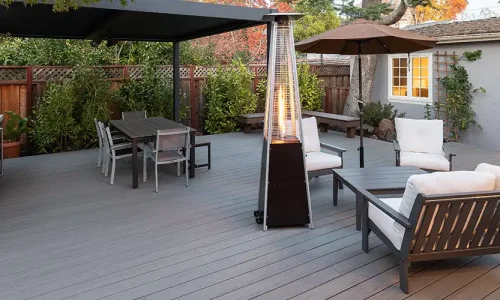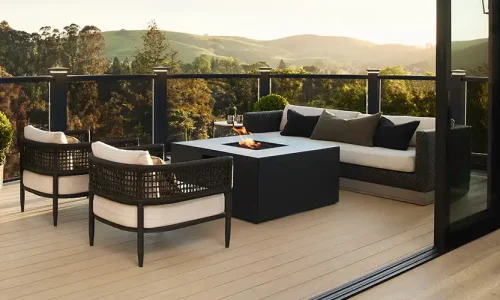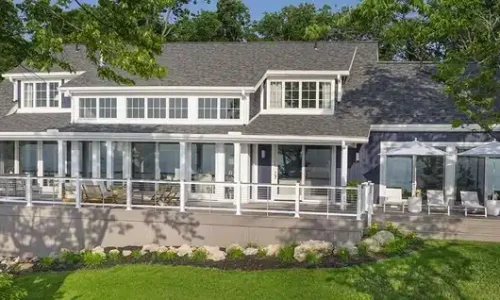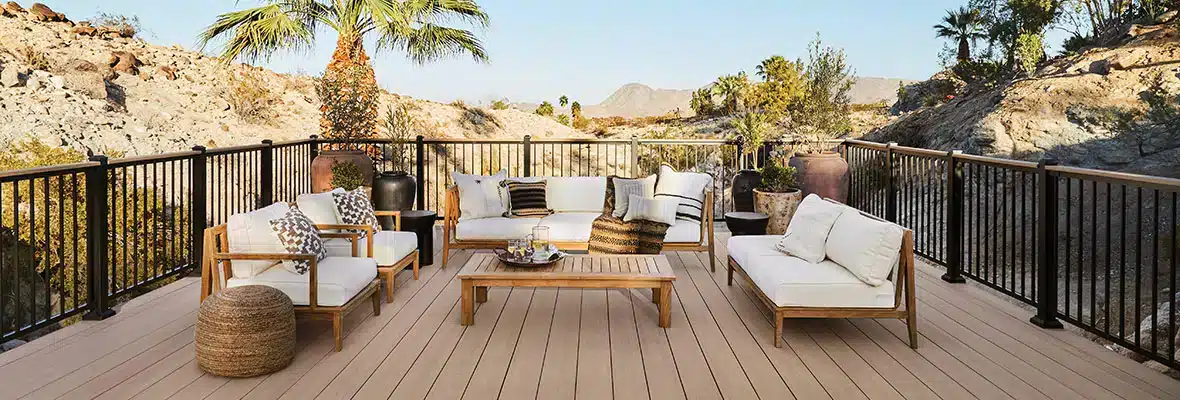
Modern decking materials have so much more to offer than traditional lumber. Manufactured products, like polymer and composite, use polymer blends and capping to improve the durability and longevity of decks.
Both high-performance materials are at least partially synthetic, so how do you decide between polymer vs. composite? The best decking choice for your home depends on a number of factors, so learn more about manufactured composite materials and their benefits below.
| Real Wood Looks | Water Resistance | Mold Resistance | Maintenance | Life Span | Upfront Cost | |
|---|---|---|---|---|---|---|
| Polymer | ⭐⭐⭐ Great | ⭐⭐⭐ High | ⭐⭐⭐ High | ⭐⭐⭐ Low | ⭐⭐⭐ 50+ years | 💲💲💲 |
| Composite | ⭐⭐ Good | ⭐⭐ Moderate | ⭐⭐⭐ High | ⭐⭐⭐ Low | ⭐⭐ 25-30+ years | 💲💲 |
| Wood | ⭐⭐⭐ Great | ⭐ Low | ⭐⭐ Moderate | ⭐ High | ⭐ 10-15 years | 💲 |
In This Article:
Advanced Polymer decking

Advanced Polymer decking is made of plastic called polyvinyl chloride and doesn’t feature any organic materials like wood pulp. Because it’s made of synthetic polymers, Polymer decking is extremely low maintenance, and water and weather resistant. You won’t have to seal it every year and it can last 50 years or longer.
Understand that Advanced Polymer decking varies in quality and appearance, and it has advanced over the decades. Older and low-quality PVC decking has a reputation for looking like plastic or getting hot in the sun.
Modern polymer from high-quality manufacturers corrects many of these concerns. In fact, TimberTech’s Advanced Polymer decking offers hyperrealistic wood looks and grain patterns in a variety of stunning colors.
| Pros | Cons |
|---|---|
| • Versatile color options • Durable • Weather resistant • Mold and mildew resistant • Real wood looks • Lightweight • Low maintenance • Best choice for fire zones | • Upfront cost • Low-quality or outdated PVC materials may be slippery or retain heat buildup |
Composite decking

Composite materials are created with a blend of polymers and organic wood fibers for improved durability and weather resistance. They often feature three- or four-sided polymer caps that prevent water penetration to protect the decking board’s core.
TimberTech’s composite core is made entirely of organic fibers with three- or four-sided polymer capping for maximum performance and protection. The four-sided cap improves water resistance from all sides, including the bottom of the board, so your deck lasts longer without fading, cracks, or rot.
Like Polymer decking, composite decking technology continues to advance and offers excellent wood grain textures and aesthetics. It looks great outperforms wood decking, but it doesn’t last quite as long as Advanced Polymer boards. Homeowners working with a budget will also appreciate composite’s lower upfront costs.
| Pros | Cons |
|---|---|
| • Versatile color options • Durable • Weather resistant • Mold and mildew resistant • Real wood looks • Low maintenance • Slip resistant • UV resistant | • Flexible boards require specific substructure installation • Uncapped boards may be prone to water and mold damage |
Capped manufactured decking
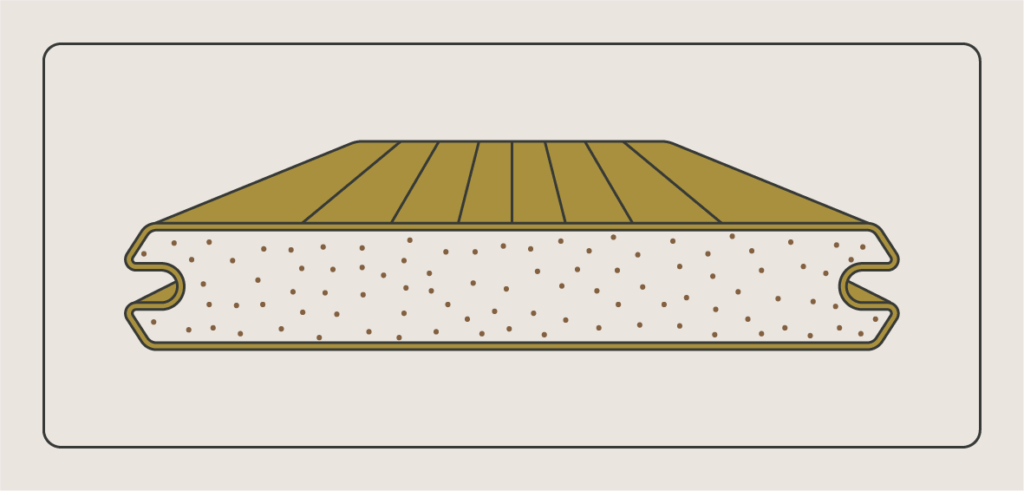
Manufactured decking includes composite and polymer materials that feature protective polymer caps. Boards may have three- or four-sided caps depending on the manufacturer and quality. Four-sided caps are the most protective since they prevent moisture penetration from every direction.
Beyond moisture protection, the decking caps prevent mould and mildew growth and they won’t crack or fade like wood decking. All of these features reduce homeowners’ maintenance costs and labor, and improve the longevity of their deck and its appearance.
Which is better? Polymer or composite decking
Both materials are low-maintenance and durable alternatives to wood decking. Either is a great choice if appearance, maintenance, and sustainability are top factors for you.
Still, there are a few key considerations that can help you decide between composite and polymer.
Longest life span: Polymer
PVC lasts much longer than other decking materials because it’s entirely synthetic and resistant to rot and weathering. TimberTech’s Advanced Polymer has a lifespan of 50 years or more, so you can enjoy your dream deck for decades to come.
Composite decking still outperforms traditional wood with a 25-to-30-year life span.
Best for water: Polymer
Synthetic PVC wins again for water resistance, so it’s great for poolside decks and properties exposed to saltwater. TimberTech Advanced Polymer decking is also slip resistant and protected against algae, mold, and mildew, so it’s safer for wet surfaces than other materials.
Best for your budget: Composite
Composite decking is typically more affordable than Advanced Polymer boards upfront, so it’s your best choice for initial savings. Both composite and polymer decking are rot resistant and low maintenance, so you’ll also save on long-term maintenance costs compared to the 10-year cost of wood decks.
Easiest to install: Polymer
PVC and composite decking installations follow very similar processes, and difficulty varies between deck size and design more than the boards themselves. However, Advanced Polymer decking is ultra lightweight compared to wood and composite, so it’s easier to work with and especially convenient for DIYers.
The key to great composite decking and Advanced Polymer installation is following your manufacturer guidelines and building codes, regardless of the material you choose. Before building, ensure all parts of your deck are adequate for your decking choice.
Both Advanced Polymer and composite decking materials build stunning, durable decks with a fraction of the maintenance required of traditional wood. At the end of the day, the best choice for you comes down to the right wood look for your home and personal lifestyle.

See & feel the TimberTech advantage
Our Advanced Polymer and Composite Decking lines combine recycled materials with all the beauty of traditional wood, making them the ultimate eco-friendly decking materials.